Buying Guides
Brass vs Stainless Steel vs Zinc Faucets: A Sourcing Guide for Importers
How brass, SUS304/SUS316 stainless steel and zinc + PPA faucets compare on cost, durability, weight, finish and compliance — and which body material fits which market.

Key takeaways
- Brass is the all-round benchmark: castable, machinable, plating-friendly and the default for premium and certified ranges.
- SUS304/SUS316 stainless steel is lead-free by nature and suits coastal, outdoor and health-conscious markets; SUS316 adds molybdenum for chloride resistance.
- Zinc + PPA bodies cut landed cost by keeping zinc on the visible shell and running water through an engineering polymer, which suits price-driven housing projects.
- Specify the waterway material, cartridge size and plating thickness in the purchase order — not just the body material.
Every faucet RFQ starts with the same question: what should the body be made of? The answer shapes unit price, carton weight, freight cost, finish options and the certifications you can realistically claim in your market. This guide compares the three body platforms we manufacture — brass, stainless steel and zinc + PPA — from a buyer's point of view.
Quick comparison
| Factor | Brass | SUS304 / SUS316 | Zinc + PPA |
|---|---|---|---|
| Relative unit cost | Medium–high | Medium–high | Low |
| Weight & perceived quality | Heavy, premium feel | Medium, solid | Light |
| Finish options | Chrome, PVD, matte black, brushed gold, rose gold | Brushed, polished, PVD | Mainly chrome |
| Corrosion resistance | Good when plated | Excellent (SUS316 best near the sea) | Depends on plating quality |
| Lead concerns | Specify lead-free alloy for regulated markets | Inherently lead-free | Water contacts PPA, not zinc |
| Typical use | Retail, hotels, certified ranges | Coastal, outdoor, wellness, minimalist design | Social housing, rental fit-outs, promotions |
Brass: the benchmark body
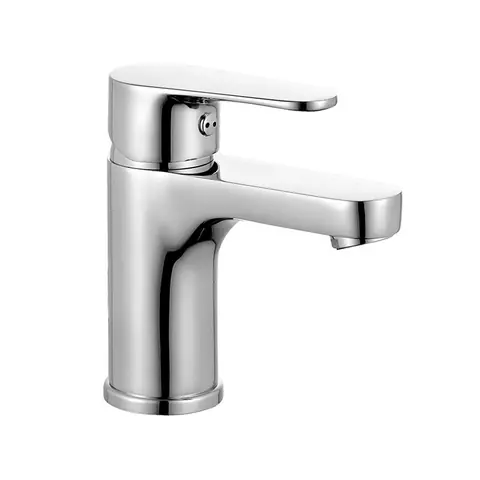
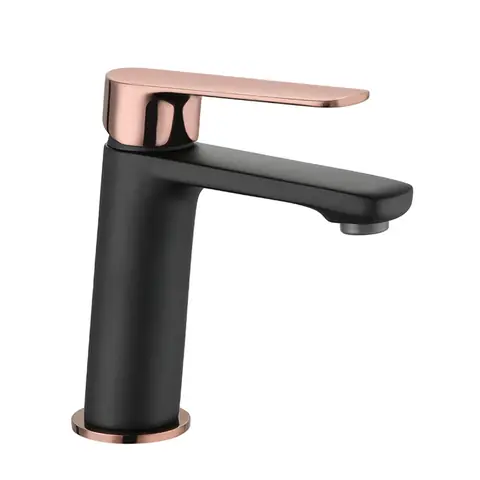
Brass remains the default for good reason. It casts precisely, machines cleanly and takes electroplating and PVD coatings exceptionally well, which is why most premium and certified ranges — including our 3177-30 basin mixer and the two-tone 3178MR series — start from a brass casting.
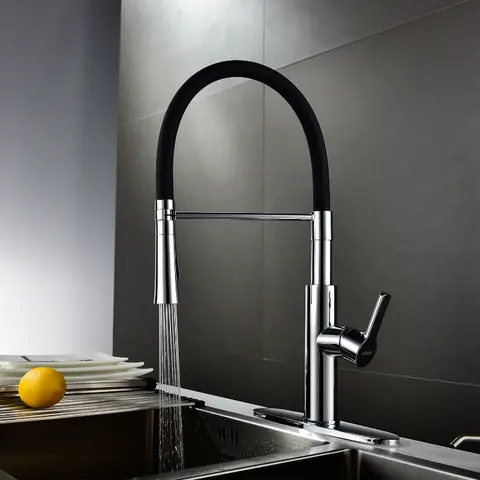
For North America and other markets with strict drinking-water rules, ask specifically for a lead-free brass casting, as used on our C0033 pull-down kitchen faucet. Lead-free alloys cost more and machine differently, so they must be named in the purchase order rather than assumed.
What to check on brass faucets
- Alloy designation for the body and the waterway parts.
- Body weight per unit — light castings usually mean thinner walls.
- Plating stack and salt-spray test duration for chrome finishes.
- Cartridge size and brand (30 mm, 35 mm or 40 mm ceramic).
Stainless steel: SUS304 and SUS316
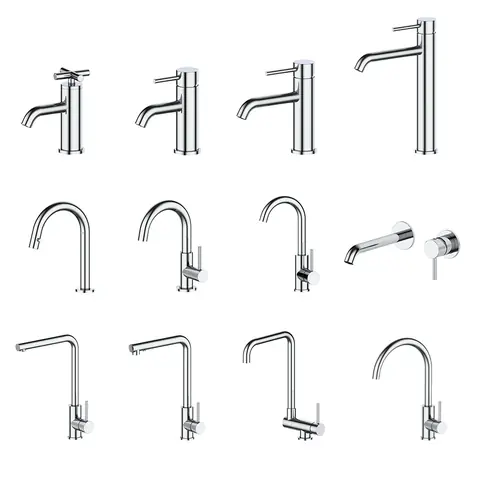
Stainless steel faucets are fabricated from tube and sheet rather than cast, which gives them a crisp, architectural profile. Because the material is the finish, there is no plating to peel — the surface is brushed or polished directly. Our 2008 series is SUS304, while the 3160, 3161 and 3163 collections step up to SUS316.
When does SUS316 matter? SUS316 contains molybdenum, which improves resistance to chlorides. That makes it the safer choice for seaside hotels, pool areas, humid climates and anywhere cleaning chemicals are used aggressively. For an outdoor column next to a pool, the extra cost is usually justified; for an interior kitchen in a dry climate, SUS304 is typically sufficient.
Zinc + PPA: engineered for price
Zinc alloy is cheaper and easier to die-cast than brass, but it should not be in prolonged contact with water. Zinc + PPA designs solve this by using zinc only for the visible shell and handle, while the water passes through a polyphthalamide (PPA) waterway. The result is a light, competitively priced faucet that still looks like a metal product once chrome-plated.
Our 3400 series and zinc + PPA kitchen collection are built this way. They suit social housing, student accommodation, rental refurbishments and supermarket promotions where the price point drives the decision.
How to choose for your market
- Start from the selling price. Work back from shelf or project price to a target FOB, then choose the body platform that can reach it with acceptable quality.
- Check the regulation. Drinking-water rules (for example in North America and parts of Europe) affect which alloys and waterway materials you may use.
- Consider the environment. Coastal, outdoor and high-humidity installations favour SUS316.
- Match the finish. If your range needs brushed gold or rose gold PVD, brass or stainless is the practical route.
- Ask for weights and test reports. Unit weight, salt-spray hours and cartridge cycle tests are the fastest objective comparison between quotes.
Frequently asked questions
Is a stainless steel faucet better than brass?
Not universally. Stainless is inherently lead-free and very corrosion resistant, while brass offers more design freedom and a wider choice of plated finishes. The better choice depends on market regulation, environment and the look you need.
Are zinc faucets safe for drinking water?
In zinc + PPA designs the water flows through the PPA polymer waterway rather than the zinc shell. Always confirm the waterway material and any certification your market requires before ordering.
Can I mix materials in one project?
Yes. Many hotel packages combine brass basin mixers in guest rooms with SUS316 outdoor showers at the pool — we consolidate cross-category orders into one shipment.